

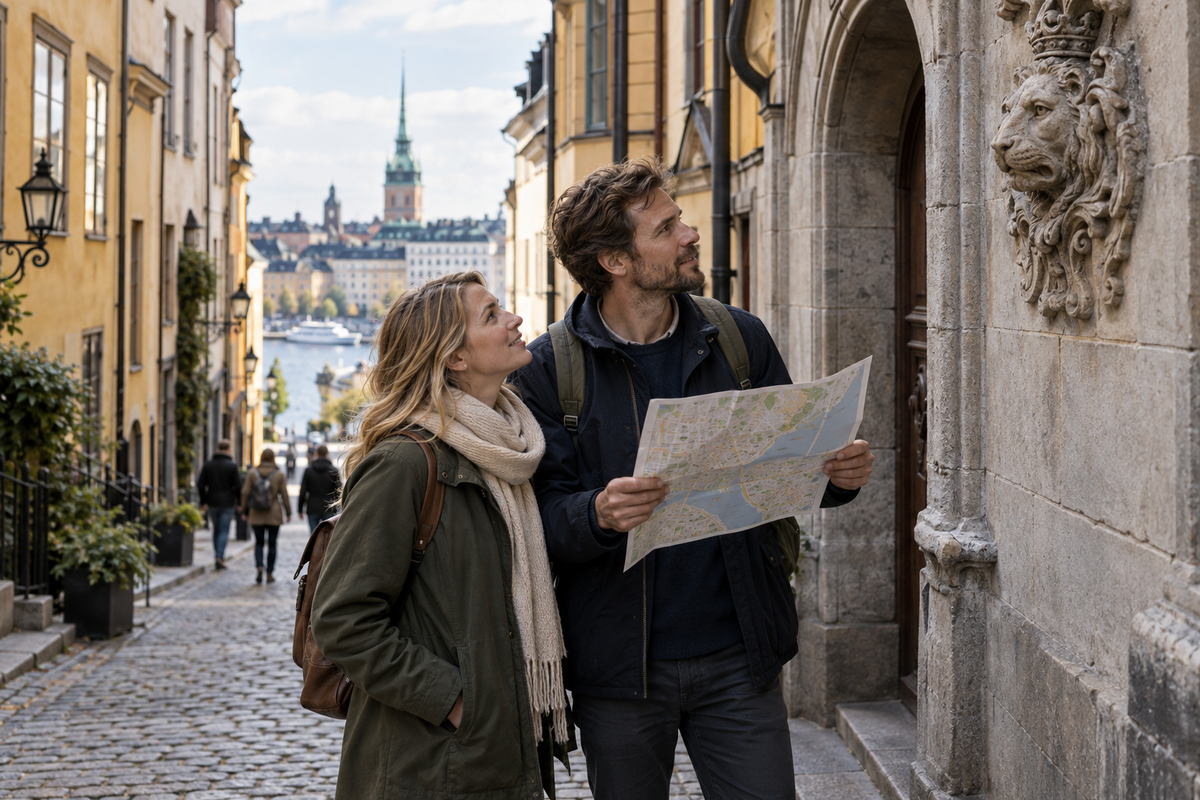
Exploring a city on your own gives you the freedom to start whenever it suits you, stop where something piques your interest, and pause without falling behind a group. At the same time, it is easy to walk quite a long way without really discovering anything. The solution does not need to be a detailed map with twenty markers. A clear area and a simple idea of what you want to see are more than enough.
The mysteries in this guide


In this guide
Limit the area before choosing stops
Choose a neighborhood or a continuous route. It is easier to have an enjoyable walk if you do not have to spend most of your time traveling between different areas. Also think about where you will start and how you will get home afterwards.
If you want facts about a place, official visitor guides and cultural organizations can provide a foundation. Distinguish between information you have verified and things that just sound plausible. Your own walk does not need to become a history lesson, but what you tell the group should be accurate.
Give the walk a theme
A theme could be architecture, signs, courtyard environments, or a particular part of the city's history. This will make you start looking more closely. Do not choose too many themes at once. If everyone gets to choose one detail to show the rest of the group, the discoveries will also be shared.
If you want a ready-made direction, a location-based mystery can be an option. Then it is the story and the tasks that guide you between the stops. You do not need to come up with what the group should do when you arrive at the next location yourself.
Understand the difference between a guide and a game
A guided city walk can provide coherent facts and the opportunity to ask questions to a person. A mystery hunt, on the other hand, is a game where you read, observe, and solve tasks yourselves. It has local roots, but the murder mystery is fiction and should not be taken as an account of real events.
You can choose Gamla stan, Haga, Örebro city center, or Wadköping. Each game has its own route. Follow it in the booklet when you play, instead of mixing it up with a general tourist walk.
Plan for stopping, not just for walking
Your shoes and outerwear should be suitable for standing still and looking around too. Keep a break in mind and leave some time if you are going to a reservation afterwards. In case of rain, it is good to be able to protect your papers and phone.
For a mystery hunt, you need the provided booklet and a phone with internet access to the Archive. For a completely independent walk, a simple map may be enough. Choose the format according to what you want to get out of the day. In the guide to Gamla stan and the guide to Haga, there are ideas for combining your own walk with a more defined activity stop.
Local city guides in several cities
Choose the city you want to visit for concrete ideas and planning. The guides distinguish free excursion suggestions from the separately purchased mystery; always check the product's current delivery information before planning to play.
- Things to do in Båstad: choose between the small town, the sea, and a longer trip
- Things to do in Eskilstuna: history, the Åströmk route, and your own mystery
- Things to do in Halmstad city center: history and a walk by Nissan
- Things to do in Helsingborg in a day: the city center, the harbor, and Kärnan
- Things to do in Jönköping: choose the industrial district or a walk by the lake
- Things to do in Karlstad city center: the square, the cultural environment, and Klarälven
- Things to do in Linköping: choose the city center or Old Linköping
- Things to do in Lund in a day: choose culture, neighborhoods, and greenery
- Things to do in Malmö in a day: the old square, a park, and a mystery
- Things to do in Västerås: the old neighborhoods, Svartån, and Lake Mälaren
The mysteries in this guide
Frequently asked questions
Does a self-guided city walk have to include a game?
No. You can plan your own walk based on an area, a few stops, and a shared interest. A mystery is a separate option for those who want to follow a story and solve clues.
How does the mystery differ from a historical walking tour?
The mystery is a self-guided game with a fictional case. You read and explore the locations yourselves; it is not a guided historical tour.
Can we buy the booklet online and go for a walk right away?
When you buy online, a physical booklet required for the game is shipped to you. Therefore, plan for delivery and do not use a new order as a promise of an immediate start to the game.
How many stops of our own should we plan?
Start with a defined area and a few landmarks. Leave time for things you discover along the way. If you are also playing a mystery, it should have its own part of the day.
How do we know if a historical fact encountered during the walk is accurate?
Distinguish between what you see and your interpretations. Check historical claims in reliable sources, such as information from the municipality or a local tourism organization, instead of drawing conclusions solely from the appearance of a building.
Can we combine our own route with the mystery route?
Plan your own walk before or after the game. During the mystery, you follow the booklet's map and instructions; your own sightseeing stops should not replace the locations required for the clues.


